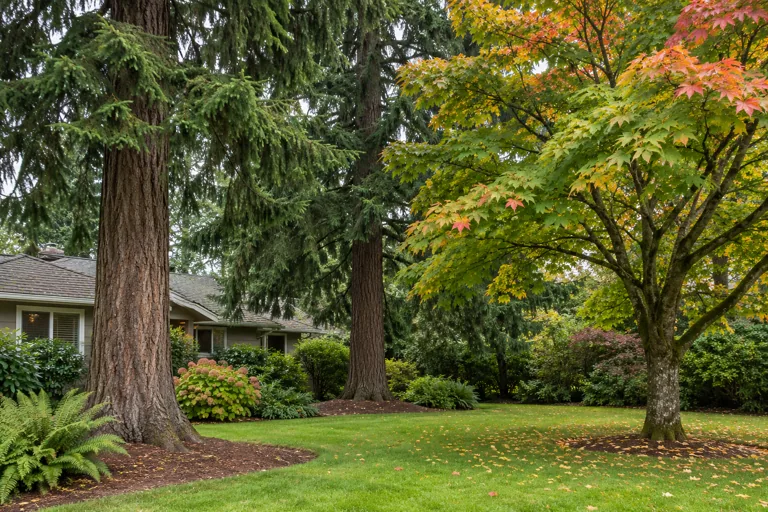
Wilkes East includes the Glisan, 162nd, 181st and Sandy corridors in the city boundary description; distinguish it from similarly named Portland neighborhoods.
For boundary trees or work near public access, confirm ownership, permissions and the equipment setup area.
Plan the tree work at the property
Cabling and bracing may be considered for certain structural weaknesses when retaining a tree is appropriate. An assessment should explain what weakness is being addressed, the tree condition and why support is preferable to another approach. Hardware does not make an unsuitable tree safe in every circumstance.
The planning question here is assess structural support options and the need for later inspection. A request for tree cabling and bracing should identify the tree, intended result and access constraints. Choose the service because it fits the work, rather than assuming every tree needs the same treatment.
Check the right authority
For a property inside Gresham, use the city tree guidance and check whether street-tree, significant-tree or sensitive-area requirements apply.
Use [official local information](https://www.greshamoregon.gov/community-and-neighborhood-engagement/neighborhood-associations/wilkes-east-neighborhood-association/) to identify the relevant authority. Confirm ownership, approvals and any public-right-of-way involvement before scheduling. This reference does not imply an affiliation with the city or county.
Prepare the service request
For a Wilkes East property, call (833) 825-0341 with the street address and ZIP code, the tree concern and safe photographs if available. Describe gates, slopes, buildings and the loading area. Ask the provider about job suitability, service availability and any assessment charge before agreeing to an appointment.
Compare tree removal, tree pruning and stump grinding to separate the scope you need. Confirm cleanup, wood removal and any later restoration in the written quote.